10 Best Email Deliverability Tools: Free vs. Paid

Email deliverability tools ensure your emails land in inboxes, not spam folders. This is vital for businesses, as nearly 17% of emails fail to reach recipients, which directly impacts revenue. Learning how to fix poor email deliverability by just 10% can boost revenue by 20%. These tools help with inbox placement, sender reputation, and email list quality.
Here are the 10 best tools, divided into free and paid options:
Free Tools
- MxToolbox: Monitors SPF, DKIM, and blacklist status. Great for basic diagnostics.
- Mailtrap: Tests emails in a secure environment. Ideal for developers.
- Google Postmaster Tools: Tracks Gmail-specific reputation and spam rates.
Paid Tools
- GlockApps: Tests inbox placement and spam triggers across ISPs. Starts at $59/month.
- Everest by Validity: Offers global insights, inbox testing, and advanced analytics. Starts at $20/month.
- Warmy: Automates domain warm-up and reputation recovery. Starts at $49/month.
Additional Insights
- Free tools are suitable for startups or low email volumes.
- Paid options provide advanced features like spam testing, real-time alerts, and domain warm-up.
- For businesses scaling up, tools like Everest or GlockApps offer deeper insights and automation.
Quick Comparison:
| Tool | Type | Starting Price | Key Features | Best For |
|---|---|---|---|---|
| MxToolbox | Free | $0 | SPF/DKIM checks, blacklist monitoring | Basic diagnostics |
| Mailtrap | Free | $0 | Email testing in a sandbox | Development environments |
| Google Postmaster | Free | $0 | Gmail-specific insights | Gmail reputation monitoring |
| GlockApps | Paid | $59/month | Inbox placement, spam testing | High-volume campaigns |
| Everest | Paid | $20/month | Global ISP insights, analytics | Enterprise-level operations |
| Warmy | Paid | $49/month | Automated domain warm-up | New or flagged domains |
Free tools are great for small-scale needs, while paid tools cater to businesses looking for detailed insights and automation. For expert help, agencies like Enflow Digital offer tailored solutions to improve deliverability and drive revenue growth.
5 Best Email Deliverability Tools in 2025 (Full Demo & Comparison)
What to Look for in Email Deliverability Tools
Email deliverability tools focus on three main areas: where your emails land, your sender reputation, and the quality of your email list. These features work together to keep your messages out of spam folders and ensure they reach your audience. Let’s break down how each one protects your campaigns.
Inbox Placement and Spam Testing
Inbox placement testing does more than confirm that your email was delivered – it shows exactly where it ends up. By using seed lists from platforms like Gmail, Outlook, and Yahoo, these tools reveal whether your email lands in the primary inbox, Gmail’s "Promotions" tab, or the dreaded spam folder.
Many tools also analyze your email content, HTML formatting, and headers against popular spam filters like SpamAssassin, Barracuda, and Google Spam Filter. They generate a spam score that highlights potential issues, such as broken links, suspicious subject lines, or poor formatting. This is crucial because about 69% of emails are flagged as spam based solely on their subject line.
Reputation Monitoring and Blacklist Checks
Your sender reputation acts like a credit score for your email domain. Deliverability tools monitor this score – ranging from 0 to 100 – by tracking factors like domain and IP health, bounce rates, and how recipients interact with your emails. A score above 80 is excellent, while anything below 70 signals trouble. To maintain a healthy reputation, aim for a bounce rate under 2% and keep spam complaints below 0.1%.
These tools also perform blacklist checks, scanning over 50 major real-time blocklists to ensure your domain or IP isn’t flagged. If issues arise, you’ll get alerts so you can address them quickly and avoid internet service providers (ISPs) rejecting your emails altogether.
Email Verification and List Cleaning
Verification tools help you maintain a clean email list by identifying and removing invalid, inactive, or harmful addresses. They catch common typos (like “gmial.com”) and flag temporary, disposable, or spam trap emails. This is essential because each undelivered email can cost you about $0.11.
Top-tier tools offer real-time API verification, which checks addresses as users sign up – whether during checkout or Omnisend newsletter subscriptions – preventing bad data from entering your system. They also ensure your SPF, DKIM, and DMARC authentication protocols are properly configured, protecting against spoofing and phishing attempts. Using double opt-in methods and regularly cleaning your list can help you maintain deliverability rates above 95%.
Free and Freemium Email Deliverability Tools
For small eCommerce businesses, free tools can provide a solid foundation for managing email deliverability. They’re ideal for startups, troubleshooting issues, or sending fewer than 1,000 emails per month. While they lack the extensive features of paid platforms, they cover the basics without adding extra costs. Let’s dive into three standout options and how they meet key deliverability needs.
MxToolbox
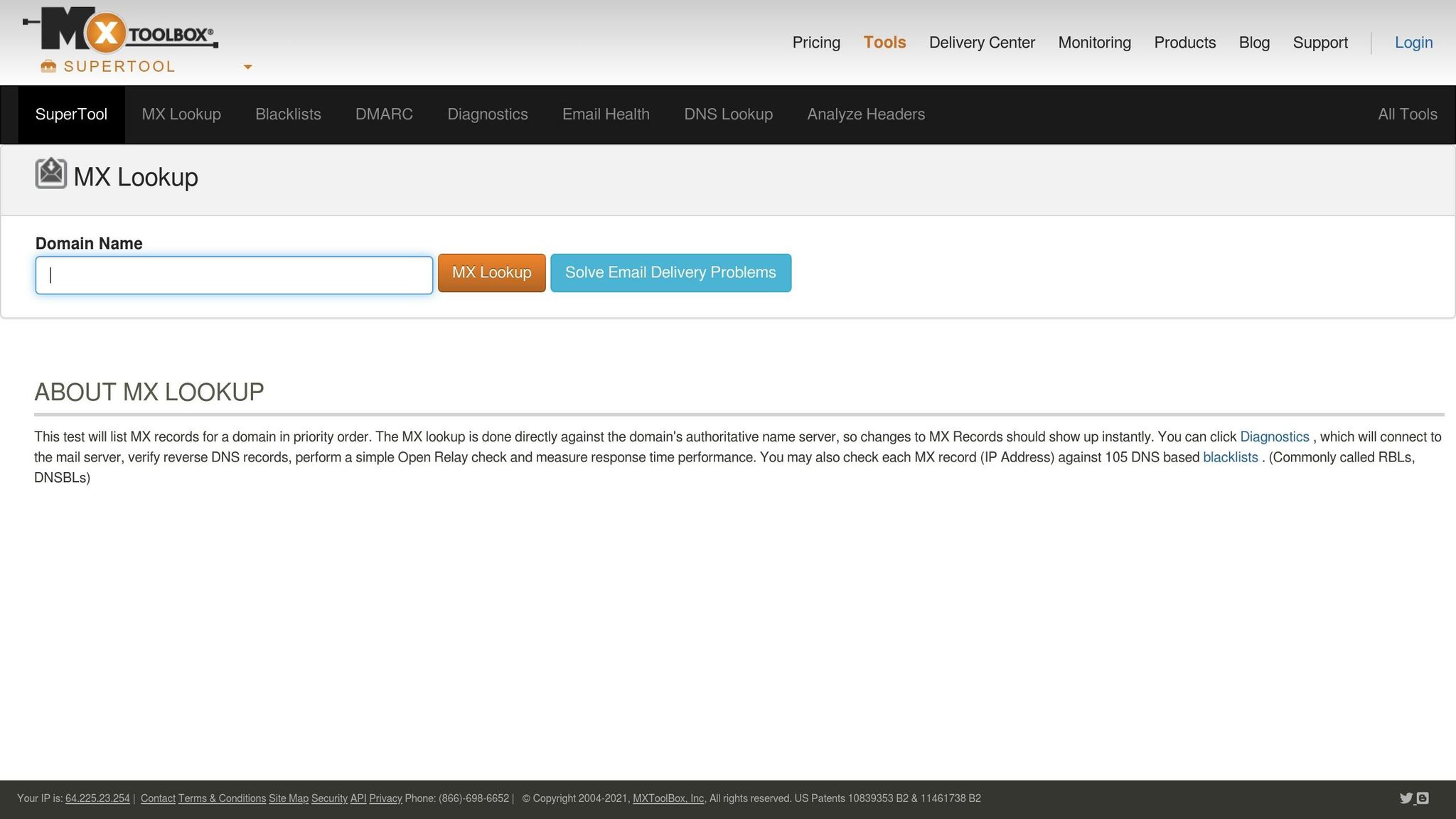
MxToolbox is a go-to tool for DNS diagnostics and blacklist monitoring. With its SuperTool, you can verify SPF, DKIM, and DMARC settings to ensure your emails meet authentication standards. On the free plan, it monitors one domain against 30 major blacklists, with weekly checks – perfect for businesses just getting started.
The interface leans toward tech-savvy users, making it a better fit for those familiar with IT workflows. Use it to quickly diagnose deliverability dips or check if your sending IP has been flagged. If you need to monitor multiple domains or want real-time alerts, the paid Delivery Center starts at $129 per month.
Mailtrap
Mailtrap offers a secure environment for testing emails without the risk of sending them to real recipients. Its Sandbox feature allows you to preview email templates, analyze spam scores, and catch broken links before hitting send. The free plan includes 100 test emails and 1,000 sending emails per month, making it a great option for small-scale testing.
"Mailtrap shines in development and staging environments where you need to test emails safely without sending to real users." – Rachel Adnyana, WordPress Expert
With a 4.8/5 rating on platforms like G2 and Capterra, users appreciate its developer-friendly design and secure testing capabilities. For those needing more capacity, paid plans begin at $14.99 per month.
Google Postmaster Tools
This tool provides direct insights into your email reputation from Gmail, one of the most dominant email providers in B2C communication. It reveals critical data like your spam rate (as assessed by Gmail), domain reputation, and authentication status. Essentially, it offers Gmail’s perspective on your sending practices.
"Google’s Postmaster Tool is one of the few reliable tools that gives you data directly from the mailbox provider." – Travis Hazlewood, Deliverability Expert, Ortto
The downside? It only tracks data for Gmail, leaving out other providers like Outlook and Yahoo. However, given Gmail’s significant role in consumer inboxes, this tool should be a priority for any eCommerce business. Best of all, it’s entirely free and has no volume restrictions.
Paid Email Deliverability Tools for Growing eCommerce Stores
As your eCommerce business scales, investing in advanced tools becomes crucial to maintain email deliverability and address potential issues before they hurt your revenue. High-volume email senders rely on these platforms to monitor sender reputation, automate testing, and ensure emails consistently make it to the inbox.
GlockApps

GlockApps uses seed-based testing to pinpoint where your emails land across major ISPs. It also monitors your domain against over 50 industry blocklists and sends automated alerts for any issues it detects. The platform identifies spam triggers, such as problematic language, broken links, or malformed HTML, which could impact deliverability at scale.
Pricing: Essential: $59/month (360 credits), Growth: $99/month (1,080 credits), Enterprise: $129/month (1,800 credits).
In 2024, Hustler Marketing used GlockApps to help a personalized jewelry brand resolve serious deliverability problems. By identifying where emails were landing (e.g., spam folders), the team made infrastructure adjustments that moved emails to the Primary tab, significantly increasing revenue.
"GlockApps removed the guesswork. Our team implemented ideas that were good in theory, but the tool helped them to know whether they were actually effective. They saved a lot of time and resources by being able to tell where these emails were landing." – Marina Taylor, Account Manager, Hustler Marketing
Everest by Validity
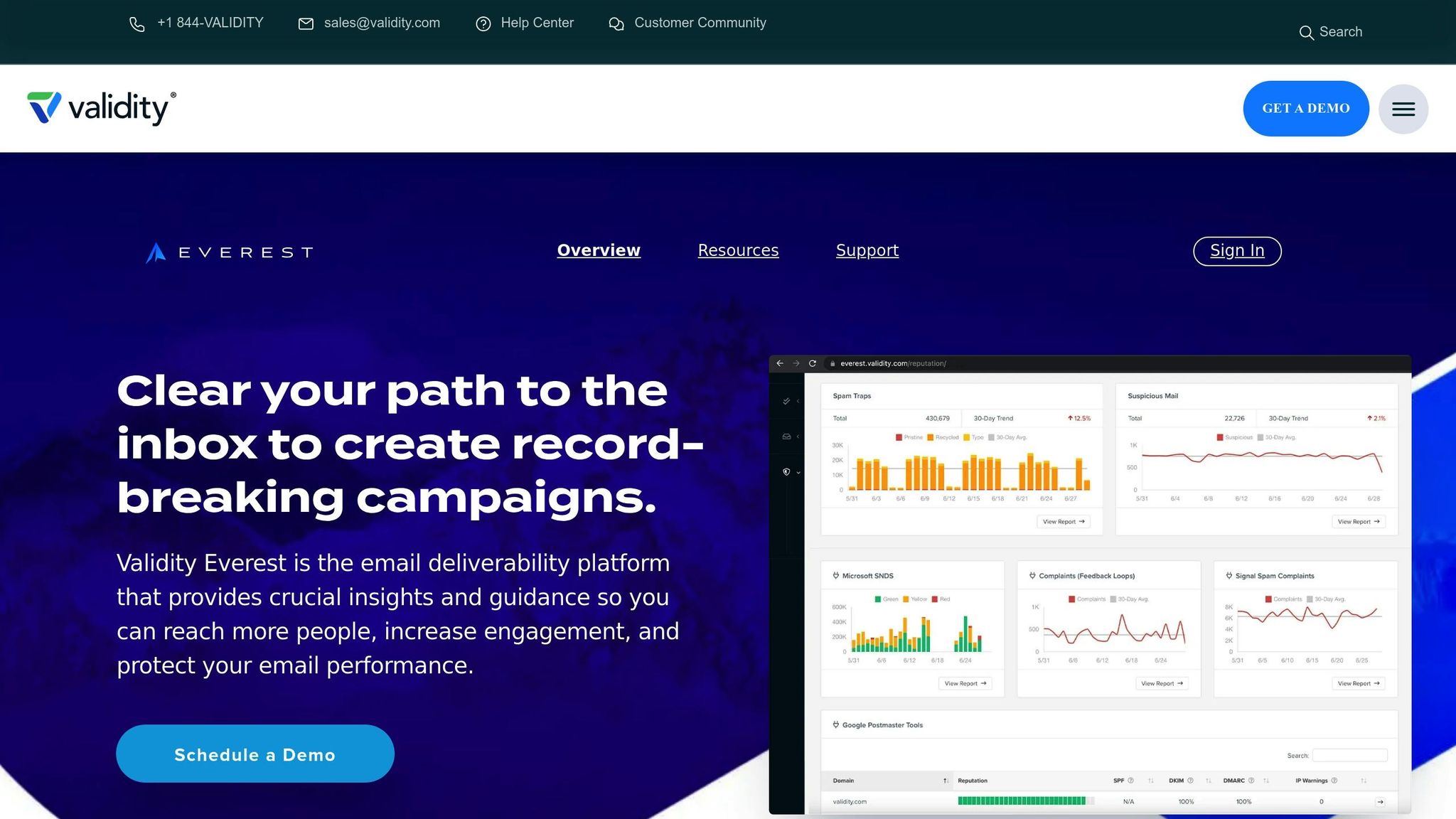
Everest by Validity is tailored for enterprise operations that need real-time reputation tracking and global insights. Its inbox placement tests span 140 ISPs worldwide. Features include Sender Certification to bypass filters, design previews across 100+ email clients, and analytics that track engagement patterns and provide ISP-specific diagnostics.
Pricing: Starts at $20/month for basic features, scaling up to $525/month for the Elements Plus plan, which includes advanced analytics and design testing.
Virgin Atlantic used Everest to manage its customer email programs, achieving a 100% inbox placement rate and a sender reputation score of 99/100. While its robust features make it ideal for large-scale email programs, the cost may be a hurdle for smaller businesses.
Warmy
Warmy focuses on automated domain warm-up and reputation recovery, making it a go-to solution for new or flagged domains. It uses a network of over 30,000 real inboxes to simulate user interactions like opening, replying, and flagging emails. This process helps ISPs recognize your domain as trustworthy and gradually builds sender credibility.
Pricing: Starter: $49/month (100 warm-up emails daily), Business: $129/month (300 emails daily), Premium: $189/month (1,000 emails daily).
Mangools turned to Warmy to address deliverability challenges, increasing their email open rate from 1% to 32% and cutting spam placement by 44% in just two weeks. For businesses with new domains or those needing to rebuild trust, Warmy automates the heavy lifting of reputation recovery.
These tools are valuable additions to a well-rounded deliverability strategy, helping eCommerce brands like yours achieve consistent success with Klaviyo email marketing services.
sbb-itb-0879168
How Enflow Digital Improves Email Deliverability for eCommerce
Data is just the starting point – what truly matters is how you act on it. While tools can identify email deliverability issues, Enflow Digital takes it a step further by turning insights into measurable revenue. The agency has driven over $30 million in revenue for more than 50 eCommerce brands, achieving an impressive average email ROI of 3,500% through a mix of technical fixes and strategic enhancements.
Deliverability Audits and List Cleaning
Enflow Digital starts with in-depth audits to uncover technical issues and underperforming areas within campaigns and automated flows. They implement DKIM, SPF, and DMARC protocols to secure domain integrity and reduce the risk of emails landing in spam folders. Their custom Engagement-weighted Deliverability (EWD) metric goes beyond just tracking delivery – it measures how well emails resonate with recipients.
Maintaining list hygiene is a critical part of their process. By removing inactive email addresses and leveraging Shopify purchase data to segment audiences, they help safeguard sender reputation with major ISPs.
"We hired Enflow to audit and improve our automations. The improved rates speak for themselves. We have seen a lot of growth." – Jennifer Freitas, Founder of The Truth Beauty Company
Once these technical improvements are in place, Enflow Digital shifts focus to refining strategies and ensuring ongoing success.
Custom Strategy and Continuous Optimization
Enflow Digital doesn’t just rely on automated tool alerts – they design custom strategies tailored to each brand’s customer journey. As certified partners with Klaviyo, Omnisend, and Shopify, they create behavioral email segmentation strategies that ensure relevant content reaches the most engaged users, driving stronger engagement metrics. Their team has conducted over 100 A/B tests to fine-tune subject lines, content, design, and timing.
By analyzing technical reputation trends alongside engagement patterns, they can spot early signs of performance dips before issues like blacklisting occur.
"Enflow Digital is the best company I have ever worked with. They are professional and on top of everything… they have taken the time to learn our store." – Suhail Rivera, Founder of Alkaline Herb Shop
This combination of technical expertise, precise segmentation, and continuous testing ensures that emails consistently land in inboxes, not spam folders.
Free vs. Paid: Which Tools Fit Your Business
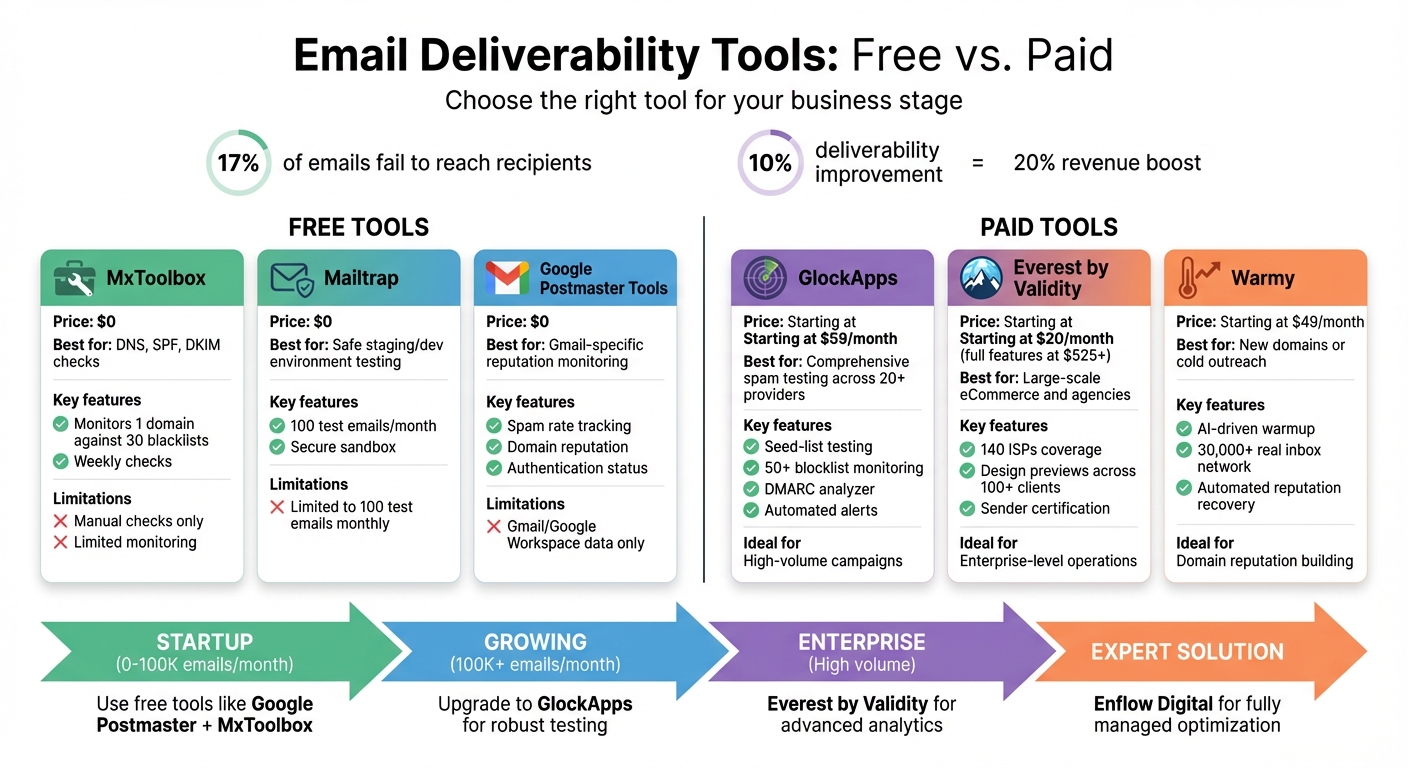
Free vs Paid Email Deliverability Tools Comparison Chart
The right tool for your email needs depends on factors like your email volume, technical expertise, and where your business stands in its growth journey. Free tools are great for basic diagnostics and manual checks but come with limitations in scope. On the other hand, paid tools offer advanced automation, broader coverage, and features like domain warmup and real-time alerts – making them indispensable as your business scales. Here’s a closer look at the differences and recommendations based on your business stage.
Free Tools Comparison
| Tool | Best Use Case | Key Limitations |
|---|---|---|
| MxToolbox | DNS, SPF, DKIM checks | Manual checks; limited to 1 monitor on free tier |
| Mailtrap | Safe staging/dev environment testing | Free tier limited to 100 test emails/month |
| Google Postmaster Tools | Monitoring Gmail-specific reputation | Provides data only for Gmail/Google Workspace |
Free tools are invaluable for initial technical setup and troubleshooting. For instance, Google Postmaster Tools is particularly helpful for businesses managing B2C email lists because it provides insights into Gmail-specific reputation. However, these tools lack the ability to offer comprehensive inbox placement data or automated monitoring across multiple email providers, which can limit their utility as your email campaigns grow in complexity.
Paid Tools Comparison
| Tool | Starting Price | Core Features | Ideal For |
|---|---|---|---|
| GlockApps | $85/mo | Seed-list testing, DMARC analyzer, uptime alerts | Comprehensive spam testing across 20+ providers |
| Everest by Validity | $20/mo* | Competitor tracking, design previews, deep analytics | Large-scale eCommerce and agencies |
| Warmy | ~$19/mailbox | AI-driven automated email warmup | New domains or cold outreach |
*Note: Everest’s $20 tier offers limited features; full functionality typically starts at $525+.
Paid tools justify their price with advanced features that free tools simply don’t offer. For example, they use seed lists to test across 100+ ISPs, providing detailed insights into inbox placement. This level of automation and coverage is critical for high-volume senders. Even a marginal improvement in deliverability can have a big impact on revenue – especially when over 100 million emails are blocked daily.
Recommendations by Business Stage
The choice between free and paid tools depends on your current needs and growth phase. If you’re just starting out, free tools like Google Postmaster Tools and MxToolbox are excellent for verifying email records and monitoring Gmail reputation. Once your email volume exceeds 100,000 emails per month, consider upgrading to paid options like GlockApps to access more robust spam testing and monitoring. For enterprise-level operations, platforms like Everest by Validity provide advanced analytics and competitive benchmarking, making them a powerful choice for large-scale campaigns. If you’re looking for a fully managed solution, working with a professional email marketing agency like Enflow Digital can help ensure consistent inbox placement through continuous testing and strategic optimization.
Conclusion
The right deliverability tools can have a direct impact on your revenue. With nearly 19% of emails landing in spam folders, even the best marketing campaigns can fall flat if they never make it to the inbox. Opting for advanced paid tools instead of basic free options can help recover lost revenue by ensuring your emails reach inboxes across major ISPs.
Free tools like Google Postmaster Tools and MxToolbox are great for basic diagnostics, but paid platforms such as GlockApps and Everest offer the level of automation and detailed insights needed as your email volume grows. It’s important to remember that these tools provide valuable data but don’t solve the issues themselves. They can alert you to problems like blacklist appearances or authentication failures, but interpreting ISP rules and implementing strategies – like proper list segmentation – requires human expertise.
"If you don’t get your emails into people’s inboxes, you don’t get opens. Or clicks. Or conversions."
This is where expert services come in. Companies like Enflow Digital offer more than just monitoring – they provide hands-on audits, list cleaning, and strategic optimizations to ensure your emails land in the primary inbox. For eCommerce businesses, even a 10% improvement in deliverability can translate to a 20% increase in total revenue.
Whether you’re a startup using free tools to validate your setup or an established brand handling high-volume campaigns with paid platforms, consistent monitoring and proactive optimization are key. Use these insights to find the right combination of tools and expert help to refine your email strategy and maximize your results.
FAQs
What’s the difference between free and paid email deliverability tools?
Free email deliverability tools are a handy option when you’re looking for basic functionality. They typically include features like inbox placement testing, simple address verification, and a general overview of sender reputation. However, these tools often have limitations. You might encounter usage caps, limited reporting capabilities, and the absence of more advanced features like DMARC analytics, IP warm-up monitoring, or real-time alerts. For small email lists or occasional use, they can work well, but they may not be enough for businesses with growing needs.
Paid tools, on the other hand, offer a more comprehensive set of features. These include higher or unlimited testing capacity, in-depth sender reputation metrics, automated processes like IP warm-up, and seamless integrations with marketing platforms or CRMs. Many also come with dedicated support, which can be a game-changer for eCommerce businesses aiming to maintain strong inbox placement and scale their campaigns. For brands focused on growth, these advanced capabilities can have a big impact on email performance and overall ROI.
How can email deliverability tools improve my sender reputation?
Email deliverability tools play a crucial role in maintaining a strong sender reputation by keeping an eye on the factors that ISPs use to evaluate your emails. These tools check if your domain and IP are properly authenticated with protocols like SPF, DKIM, and DMARC, highlighting any misconfigurations so you can address them before they cause issues. They also monitor key metrics like your domain’s reputation score, bounce rates, and spam complaints, providing alerts for concerning trends such as high hard bounce rates or an increase in complaints.
By tackling these problems – whether it’s cleaning up your email list, removing invalid addresses, or fine-tuning your sending patterns – you can lower the chances of your emails being marked as spam or ending up on a blacklist. Many of these tools also offer practical suggestions, like updating your DNS records or refining your email branding, to further strengthen your sender reputation. For eCommerce brands, combining these insights with a service like Enflow Digital’s email deliverability recovery can help ensure your campaigns consistently land in inboxes, keeping your reputation intact.
Why is it important to verify and clean your email list for better deliverability?
Keeping your email list clean and verified is key to successful email marketing. By removing invalid, inactive, or risky email addresses, you can significantly cut down on bounce rates, safeguard your sender reputation, and avoid landing in spam folders.
A well-maintained list ensures your emails reach the right audience – those who are engaged and interested. This not only boosts deliverability but also helps you get the most out of your marketing efforts, driving better ROI. It’s a straightforward yet crucial practice for any email campaign.